Decades in the Making: How Assassin's Creed and God of War Evolved Over Time
Two long-running franchises reinvented themselves without starting over. A general look at how Assassin's Creed and God of War changed shape across their histories.
Two long-running franchises reinvented themselves without starting over. A general look at how Assassin's Creed and God of War changed shape across their histories.
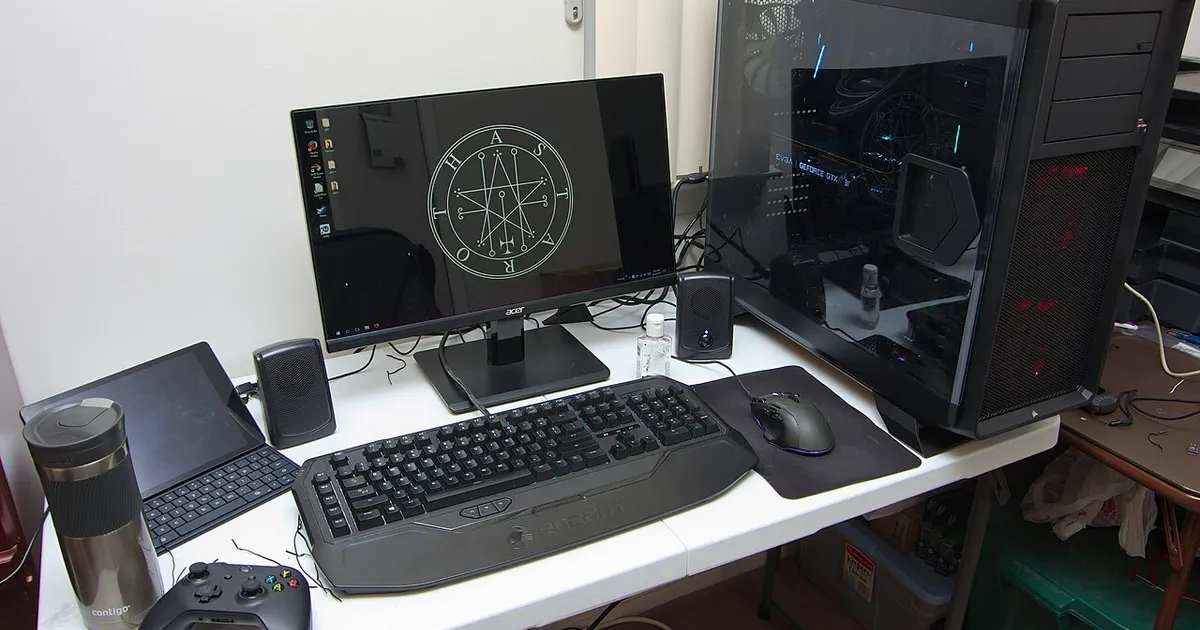
Photo by Brian Wong / Wikimedia Commons / CC BY-SA 2.0
Some franchises stay in their lane for a decade or more; others reinvent themselves so thoroughly that later entries barely resemble where they started. Assassin’s Creed and God of War both fall into the second category, and looking at how each series evolved says a lot about how long-running games stay relevant.
Assassin’s Creed: from stealth to RPG
Assassin’s Creed, developed by Ubisoft, began as a stealth-focused action series built around a secret war between Assassins and Templars playing out across real historical settings. Early entries emphasized parkour-driven movement, crowd blending, and precise assassinations over open combat. Over time, the series gradually shifted toward role-playing game mechanics — gear with stats, skill trees, and open-world exploration systems closer to a traditional RPG than the original stealth-action formula. That shift changed how combat, progression, and even historical settings were approached, moving the franchise from tightly scripted city-based stealth toward sprawling, systems-driven open worlds.
God of War: from arcade brawler to intimate story
God of War, developed by Santa Monica Studio, followed its own dramatic transformation. The original trilogy built its identity around fast, combo-heavy hack-and-slash combat rooted in Greek mythology, with a protagonist defined largely by rage and spectacle. The series’ later reinvention shifted to Norse mythology and rebuilt its combat and camera around a slower, more weighty style, alongside a much more character-driven story centered on fatherhood. That change wasn’t just cosmetic — the camera work, pacing, and even the way combat encounters are designed all reflect a fundamentally different design philosophy than the earlier games.
Why long-running franchises reinvent themselves
Reinvention like this is usually less about chasing trends and more about avoiding the fatigue that comes from repeating the same formula too many times. A franchise that runs for over a decade risks its core loop feeling stale even to its most loyal players, so a deliberate structural change — new mechanics, a new setting, a new tone — can bring both lapsed and new players back in. It’s a genuine risk, since a big enough shift can alienate fans of the earlier style, but both of these franchises are frequently cited as examples of the approach paying off.
What this means for players catching up
If you’re coming to either series fresh, it’s worth knowing that “early” and “recent” entries can feel like different games entirely, not just updated versions of the same one. That’s not a flaw — it’s closer to how long-running franchises stay creatively alive across many years, rather than shipping the same experience on repeat.
Long histories like these are a reminder that a franchise’s identity isn’t fixed at launch. The games that last tend to be the ones willing to change shape when the moment calls for it.
Our picks: Graphics cards & Game credit & memberships
Shop on Amazon
Affiliate links.As an Amazon Associate I earn from qualifying purchases. Links below go to Amazon; prices and availability change, so check Amazon for current pricing.Affiliate disclosure
NVIDIA GeForce RTX 5070 Ti
16GB card that handles high-refresh 1440p and entry 4K.
Check price on Amazon

Illustrative photos: Photo by Timothy Borkowski / Wikimedia Commons / CC BY-SA 3.0; Photo by Bryan Ochalla / Wikimedia Commons / CC BY-SA 2.0; Photo by Advanced Micro Devices, Inc. (AMD) / Wikimedia Commons / Attribution