Red Flags That a Hardware Review Cannot Be Trusted
The warning signs that separate genuine, independent hardware testing from disguised marketing content — from uniform scores to missing methodology.
Main page for gaming pcs: Gaming PCs →
The warning signs that separate genuine, independent hardware testing from disguised marketing content — from uniform scores to missing methodology.
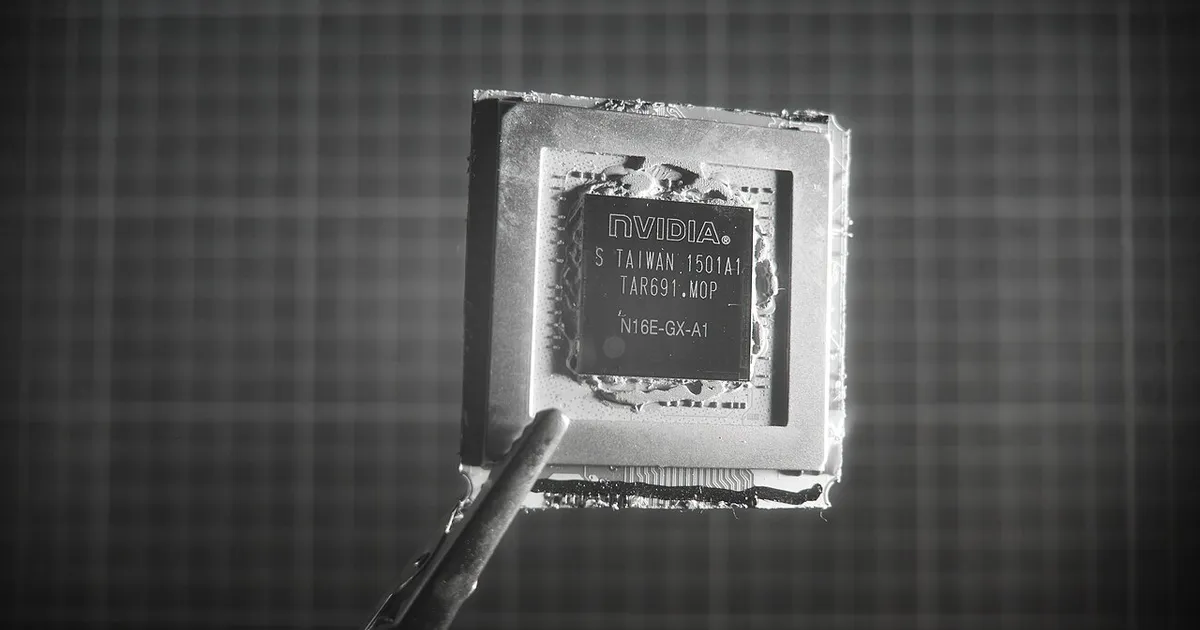
Photo by FritzchensFritz / Wikimedia Commons / CC0
Not every hardware review is trying to inform you. Some exist mainly to move product, and they’re often dressed up well enough that the difference isn’t obvious at a glance. Learning to spot the warning signs takes a few minutes and can save you from a purchase decision based on content that was never independent in the first place.
Suspiciously Uniform Scores
If a site’s reviews all land in a narrow band — say, every product scores between 8.5 and 9.5 out of 10 — that’s a pattern worth noticing. Real hardware varies: some products are mediocre, some are genuinely bad, and a reviewer testing a wide range of components should occasionally say so. A review library where almost nothing scores below “great” usually means either the negative reviews aren’t being published, or the scoring exists mainly to look credible rather than to differentiate products. Compare scores across a site’s back catalog, not just the one review you’re reading, before trusting the number.
No Explanation of How Testing Was Done
A trustworthy review tells you what was measured and how, even briefly: which benchmark suite, how many runs, what settings, what comparison points. If a review states conclusions — “excellent thermal performance,” “best-in-class value” — without ever explaining what was actually done to reach them, there’s no way to check the claim. This is different from a review being short; a short review can still name its method. The absence of any method at all is the flag to watch for.
Affiliate Links Everywhere, Substance Nowhere
Affiliate links themselves aren’t a problem — they’re a common, disclosed way that review sites earn revenue, including ours. The red flag is when the affiliate link is doing more work than the actual writing: when a “review” is mostly product description and a large “Check Price” button, with little evidence anyone spent time with the product. If you can’t find a single specific, testable observation in the piece — nothing about how it performed, felt, or behaved beyond what’s already on the packaging — the primary purpose of the page probably isn’t informing you.
Timing That Lines Up Too Neatly With a Launch
Be skeptical of glowing reviews that appear the instant a product launches, with no caveats and no mention of what wasn’t tested yet. Genuine hands-on testing — especially for anything involving thermals, durability, or sustained performance — takes time. A review published hours after a product’s embargo lifts can still be honest, but if it reads as fully conclusive with zero caveats about long-term behavior, treat the conclusions as preliminary rather than final.
No Disclosure of How the Unit Was Obtained
Whether a reviewer bought a component or received it free from the manufacturer doesn’t automatically make a review dishonest, but it’s information you’re entitled to have. Reputable outlets disclose this as a matter of course. Its total absence — not even a boilerplate disclosure line anywhere on the site — is worth noting, especially combined with the other flags above.
What to Do When You Spot These Flags
Spotting one red flag doesn’t mean throwing the review out entirely, but it should lower your confidence and send you looking for a second source. Cross-check the specific claims that matter to you — power draw, thermals, real-world performance — against at least one other outlet that discloses its methodology. When multiple independent reviews with disclosed testing converge on the same conclusion, that consensus is far more reliable than any single glowing writeup, no matter how polished it looks.
Our picks: Graphics cards & Processors
Shop on Amazon
Affiliate links.As an Amazon Associate I earn from qualifying purchases. Links below go to Amazon; prices and availability change, so check Amazon for current pricing.Affiliate disclosure
NVIDIA GeForce RTX 5070 Ti
16GB card that handles high-refresh 1440p and entry 4K.
Check price on Amazon
Illustrative photos: Photo by Timothy Borkowski / Wikimedia Commons / CC BY-SA 3.0; Photo by Myself User:ZyMOS / Wikimedia Commons / CC BY-SA 4.0; Photo by Advanced Micro Devices, Inc. (AMD) / Wikimedia Commons / Attribution; Photo by Jacek Halicki / Wikimedia Commons / CC BY-SA 4.0; Photo by Ondřej Martin Mach / Wikimedia Commons / CC BY-SA 3.0